Year 3
Welcome to Year 3!
We’re so excited to begin Autumn 1 and start our fantastic Year 3 journey of learning, discovery and fun! This term, we’ll dive into new topics, build new skills and make wonderful memories together as we begin the next chapter of our learning adventure.
Our classroom is a place where curiosity and creativity thrive, and we can’t wait to see everyone grow in confidence, kindness and independence as we begin this exciting new year.
Autumn 1 Weekly Timetable
Each day, the children will focus on the core subjects in the morning – Writing, Whole Class Reading, Maths, Spelling and Times Tables. Foundation subjects are spread out throughout the week.
Important sessions to note:
Monday - Singing and homework will be sent home
Tuesday - Class Prayer
Wednesday - Gospel Assembly
Thursday - Class Prayer, Homework due in, Spelling and Arithmetic Tests.
Music with Mrs Allen and PE with Mrs Abbate.
Friday - Praise Assembly
Please remember to have your PE kit in school every day. Children need to be in full school uniform and will get changed at school, prior to the lesson.
The children also completed swimming lessons this half-term.
Homework
Homework will be set and sent home on a Monday and should be returned by a Thursday.
Children should spend 20 minutes on each piece of weekly homework. Children do not need to complete all their homework in one go. Little and often throughout the week is key!
English and Maths homework will be sent on a 3-week rotation, unless there is a particular 'Themed' homework that week. We have been providing a homework club twice a week, which has been a real success. Please contact the school office if you would like your child to attend.
English Homework – reading or writing (one piece on a three-week rotation)
Maths Homework – consolidation of the week and / or timetables (one piece on a three-week rotation)
Themed homework - if there is a significant event happening, we will use homework as a chance to explore these, instead of English or Maths.
Times Tables Rockstars and Spelling Frame - all children have personal logins. Children need to practise every day in preparation for their arithmetic and spelling tests on a Thursday. (Daily for 10 minutes)
Reading - children need to read every day and have their reading diary signed (Daily for 10 minutes).
What will we learn during Autumn 1 ?
Writing
In our literacy lessons, we will be exploring the following texts:
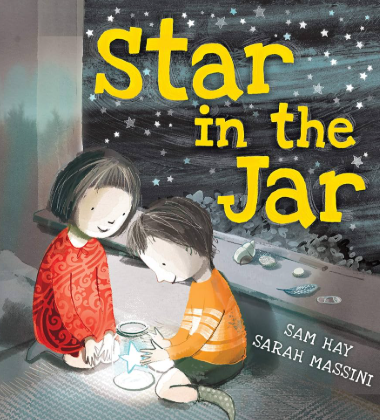
Star in the Jar by Sam Hay (Non-fiction - Retell an aspect of the narrative)
I asked the little boy who couldn't see (Poetry)
I Asked the Little Boy Who Cannot See by Unknown Author
I asked the little boy who cannot see,
“And what is colour like?”
“Why, green,” said he,
“Is like the rustle when the wind blows through
The forest; running water, that is blue;
And red is like a trumpet sound; and pink
Is like the smell of roses; and I think
That purple must be like a thunderstorm;
And yellow is like something soft and warm;
And white is a pleasant stillness when you lie
“And dream.”
The children will develop their writing skills through sentence-stacking lessons and build up to an independent writing task.
This half‑term, the children will complete two independent writing tasks: retelling part of the narrative and creating their own colour‑themed poems to show what different colours make them think and feel.
Key websites to support writing development
Grammar, punctuation and spelling - KS2 English - BBC Bitesize
Reading
During our guided reading lessons this half-term, Year 3 will be reading and analysing text excerpts of the following:
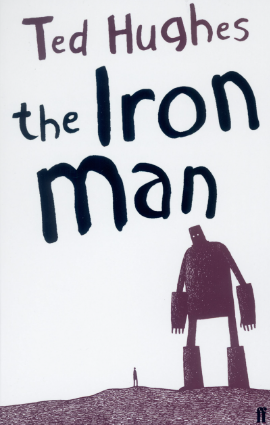
The Iron Man by Ted Hughes
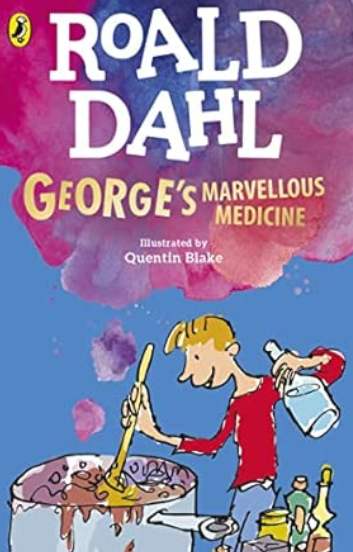
George's Marvellous Medicine
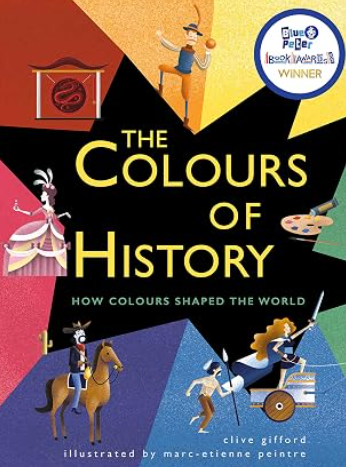
The Colours of History
Our lessons will focus on reading fluency, understanding word meanings in context, summarising and answering retrieval questions. We will also focus on developing independent inference skills so children can read beyond the surface meaning and explore the ideas, themes and messages in the texts.
For our class novel lessons, the children will continue to explore and read the whole text of The Iron Man by Ted Hughes.

Maths
In Maths, we will explore place value followed by addition and subtraction.
We will use White Rose Maths, firstly developing the children's fluency and building on the application of mathematical knowledge to deepen their understanding, master concepts and apply what they have learnt to a range of problem-solving and reasoning.
Here are some links to help with learning:
Place value - Year 3 Maths - BBC Bitesize
What is place value? - KS2 Maths resources for Year 3 - BBC Bitesize
Number & place value in Year 3 (age 7–8) - Oxford Owl for Home
Adding and subtracting - Year 3 Maths - BBC Bitesize
Addition & subtraction in Year 3 (age 7–8) - Oxford Owl for Home
Times Tables
The children have dedicated time twice a week to learn and practise times tables to ensure they are increasing in accuracy and speed. This needs to be supported daily at home for at least 10 minutes. By the end of Year 3, children should aim to know the 3, 4 and 8 times tables as well as 2, 5, 10 times tables.
Times Tables Rock Stars (ttrockstars.com)
RE - Creation and Covenant
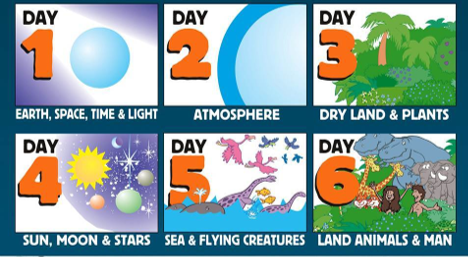
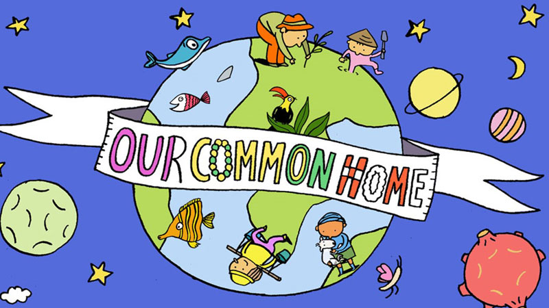
In this branch, the children will learn that the Bible was written by people of faith, called Priests, and that other religions have their own creation stories. They explore the Genesis creation story as an act of love and goodness, learning about the Sabbath as a day of rest and why Sunday is holy for Christians. They discover that God made us in His image and learn what psalms are and how they help people praise, thank or ask God for help. Children are also introduced to Pope Francis’ Laudato Si’, which teaches us to care for our world through stewardship. Keywords such as Israelites, Yahweh and covenant help them understand how people in the Old Testament lived their faith and trusted in God’s promises.
Science - Rocks
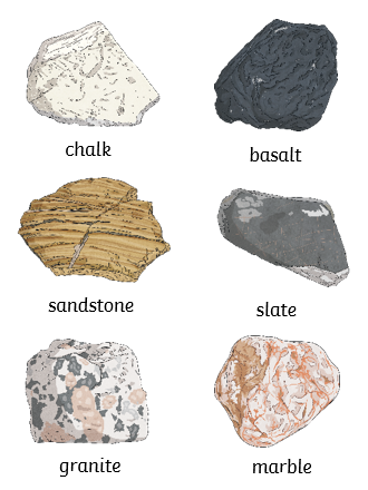
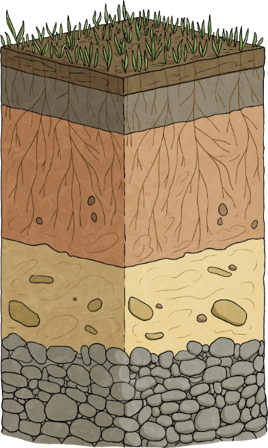
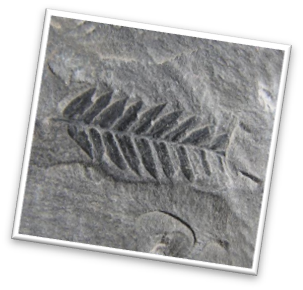
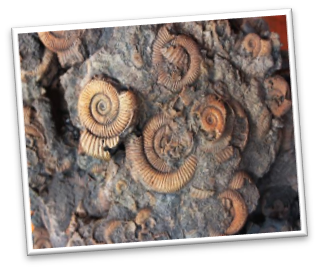

In Year 3, children become young geologists as they explore the fascinating world of rocks and soils. They learn to describe, compare and group rocks, making careful observations to discover how each one feels, looks and behaves. Through hands‑on investigations, they group rocks based on properties such as hardness, texture and permeability, and begin to understand how weathering and erosion shape the landscape over time. The children explain how fossils form and what they reveal about life millions of years ago, before examining different types of soil and using evidence from their observations to explain how soils are created. Finally, they test and compare soils to find out which are most permeable, linking their results to real‑world examples of how rocks and soils affect our environment.
Useful Websites
Rocks - Year 3 Science - BBC Bitesize
ROCKS - Formation, Classification and Uses - Science for Kids
History - Ancient Egypt
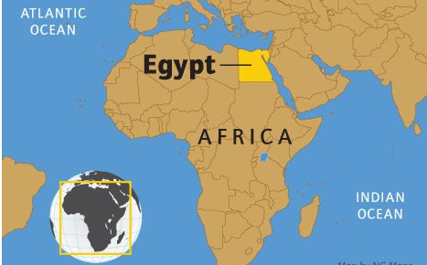
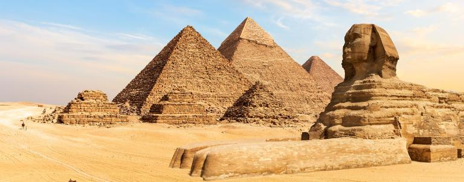
In this topic, the children explore the world of Ancient Egypt, learning the difference between ancient and modern Egypt and how the River Nile shaped people’s lives. They investigate artefacts to understand the past and find out who Tutankhamun was and why he is so famous. The children discover what daily life was like, including Egyptian tombs, burial sites and the process of mummification, learning how important the afterlife was to the Egyptians. They also learn about the pyramids — what they were, how they were built — and practise writing simple hieroglyphics. Along the way, they explore some of the amazing inventions the Ancient Egyptians created that we still use today, such as paper, pens, locks, keys and even toothpaste.
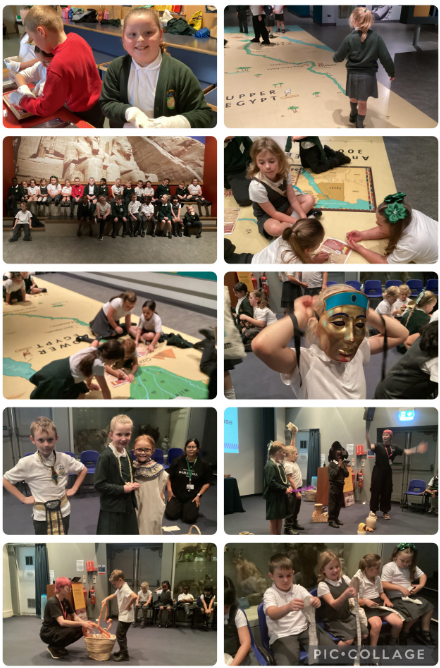
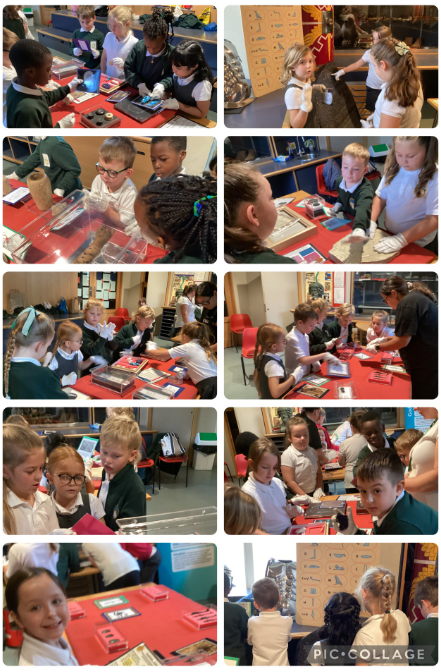
We enjoyed our trip to the World Museum, Liverpool!
Useful Websites
https://www.bbc.co.uk/bitesize/topics/zg87xnb
https://www.youtube.com/watch?v=tqY-_wAH4Wg
https://www.primaryhomeworkhelp.co.uk/Egypt.html
DT - Structures

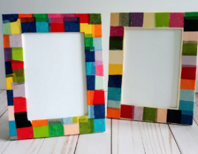
In DT, the children will learn how different structures are made strong and stable, exploring the features that help a photo frame stand securely without falling. They design their own freestanding frame using labelled sketches and choose suitable materials and shapes to match their ideas. The children develop practical skills such as measuring accurately, cutting and joining materials safely, and using simple finishing techniques to improve appearance. They learn to work neatly and take pride in presentation, before testing how stable and attractive their finished product is. Finally, they evaluate their work and suggest realistic improvements, building confidence as young designers.
Physical Education
This half-term, Year 3 will begin their swimming lessons. Further details will be shared shortly. In addition, the children will have a PE lesson with Mrs Abbate every Thursday.
Computing
Computing systems and networks – Connecting computers
In Year 3, children learn how computers connect and communicate, beginning with understanding how digital devices use inputs and outputs and how networks help us share information and work more efficiently. They explore the physical parts of our own school network before moving on to creating media through stop‑frame animation. The children discover that animations are made from sequences of images, plan their own short animation, and learn the importance of working carefully and consistently. They review and improve their work, then experiment with adding other media to enhance their final animation, developing both creativity and digital confidence.
PSHE/RSE
In Year 3, children follow myHappymind and Ten Ten Life to the Full programmes to learn about respecting their bodies and understanding how their brains work. They explore how our bodies are gifts from God and how we can look after them with care and gratitude. Through the Meet Your Brain lessons, children learn how the brain and mind work together, discovering amazing facts about neuroplasticity and the different parts of the brain, including the Amygdala. They find out how to train and look after their brains, learning that “Happy Breathing” helps us stay calm and focused. These lessons help children build confidence, self‑awareness and respect for themselves and others.