Year 2
Welcome to Year 2!
From Miss Williams, Mrs Bennett, Mrs Kitchen and Mrs Jervis.
Welcome to our Year 2 class page! In Year Two, we love making learning fun and are always here to help you on your learning journey. Don't forget that there are many adults in class and around school who are always here to help you, and that God is always here for us too.
On this page you will find all the key information you’ll need throughout the year along with information about our learning.
Key things to remember:
- Homework books will be sent home on Mondays and must be returned to school on Thursdays.
- Reading records must be signed by your parents on a daily basis and returned to school each day.
- On Thursdays, we will have our spelling test. On a Friday we will have our arithmetic test based on the learning we have completed during the week.
- You will need to wear your PE kit on Fridays this half-term.

Our Mission Statement and school prayer
Religious Education
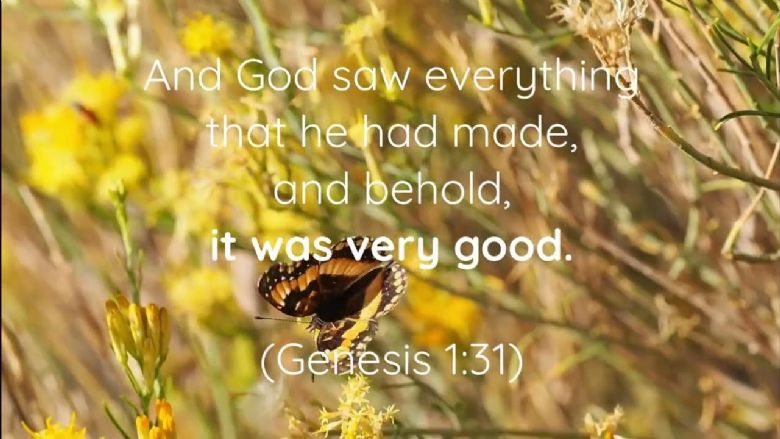
"God saw all that he had made, and it was very good."
Genesis 1:31
This term in Religious Education, our focus is Creation and Covenant. The children will explore the beautiful story of Creation in the Book of Genesis and learn how Catholics believe that God created the world and all living things with love and care. We will reflect on what it means to be made in God's image and discuss how we can show respect and kindness to others as members of God's family. The children will also learn about the importance of being stewards of creation and consider practical ways they can care for our world.
As part of this unit, we will learn about Noah and God's covenant with him after the Great Flood, exploring the rainbow as a symbol of God's promises and hope. The children will discover how covenants and promises continue to be important in the lives of Catholics today, particularly through the Sacrament of Baptism. We will also deepen our understanding of Judaism by learning about the Torah and recognising connections between Jewish and Christian beliefs. Through discussion, prayer, storytelling and reflection, we hope to help children develop their relationship with God and appreciate the importance of faith in people's lives
Writing
During this term we will be focusing on using great language, punctuation and more complex sentence structures to write fiction and non-fiction texts based on high-quality texts. The texts we will use this term are:
This term, the children will explore a range of high-quality texts and develop their skills in writing for different purposes and audiences. Following the Year 2 National Curriculum, they will continue to build their confidence in using accurate punctuation, adventurous vocabulary and a variety of sentence types, whilst learning how to plan, write, edit and improve their work.
Narrative Writing – The Building Boy by Ross Montgomery
Using this imaginative adventure story as inspiration, the children will retell and adapt a narrative, creating their own exciting versions of the story. They will focus on describing characters and settings, sequencing events clearly and using expanded noun phrases and conjunctions to make their writing engaging for the reader.
Poetry – If I Were in Charge of the World by Judith Viorst
The children will explore free verse poetry and use their imaginations to create their own poems. They will experiment with rhythm, repetition and descriptive language while expressing their ideas, thoughts and feelings in a creative way.
Instruction Writing – How to Make a Bird Feeder
Linked to our Science learning, the children will learn how to write clear and effective instructions. They will identify the features of instructional texts, including commands, time conjunctions and numbered steps, before creating their own set of instructions.
Postcard Writing – Meerkat Christmas by Emily Gravett
Inspired by this engaging text, the children will learn about the features of postcards and practise writing in the first person. They will write postcards from the perspective of a character, describing events, experiences and feelings using interesting vocabulary and accurate punctuation.
Throughout the term, the children will also continue to develop their handwriting, spelling and editing skills, helping them to become confident and independent writers.We will focus on the structure and elements that are characteristic of each genre (narrative, poetry, instructions and letter writing) in order to ensure each piece of writing is coherent and cohesive. As well as this, throughout their writing, the children will be encouraged to use new language and grammar to make their writing clear and engaging. They will also be taught to re-read their work and begin to check that it makes sense and to find any errors in spelling and punctuation, as well as ensure their presentation is up to a high standard. They will also continue to edit their work, often with a purple pen and identify areas where they can level up their sentences.
We will continue to practise our handwriting and the cursive script, checking that letters are all of a consistent size and ensuring capital letters and ascending letters are much taller and well-formed.
Reading
In Year 2 we begin our transition away from phonics to support us in becoming confident, fluent, life-long readers. Alongside the children's daily reading groups, we will have a whole-class reading lesson where we begin to think more deeply about the texts we read, as the children develop their fluency, prosody and comprehension skills.
Each day ends with story time, where the children are given the opportunity to immerse themselves in a class book read by the teacher. Children will also have plenty of opportunities to visit our school library, where they can explore a range of genres, discuss books they have read with others and find books written by authors they have discovered during the year.
Please see the link below which will take you to our literacy page. Here you will be able to access a range of documents and videos to help with the pronunciation of phonetical sounds to help your children with their reading.
Mathematics
Place Value
This term, the children will develop a secure understanding of numbers to 100. Following the White Rose Maths scheme and the Year 2 National Curriculum, they will learn to recognise the value of each digit in a two-digit number, compare and order numbers, count in steps of 2, 3, 5 and 10, and use number lines and practical resources to deepen their understanding. Children will be encouraged to explain their reasoning and apply their knowledge in a range of problem-solving activities.
Addition and Subtraction
In this unit, children will build their confidence in adding and subtracting two-digit numbers using practical resources, pictorial representations and written methods. They will learn to partition numbers into tens and ones, exchange where necessary, and solve a variety of calculations and word problems. Through the White Rose approach, children will develop fluency, reasoning and problem-solving skills while gaining a deeper understanding of how numbers work.
Shape
Children will explore the properties of both 2D and 3D shapes, learning to identify and describe their features using mathematical vocabulary. They will investigate the number of sides, vertices, edges and faces, sort shapes according to their properties, and recognise shapes in everyday objects. Through practical and engaging activities, children will develop their spatial reasoning skills and apply their understanding of shape to solve problems and make patterns.
Science
This term in Science, our topic is Animals Including Humans. The children will learn about how animals, including humans, grow and change throughout their lives. They will explore life cycles and discover that all living things have offspring which develop into adults. Through observations, investigations and discussions, the children will compare different animals and learn about the variety of ways animals reproduce and care for their young.
We will also investigate what humans and animals need to survive and stay healthy. The children will learn about the importance of a balanced diet, regular exercise and good hygiene, and consider how these choices affect their physical health and wellbeing. There will be opportunities for practical investigations, including exploring heart rate during exercise and discussing healthy lifestyle choices. The children will develop their scientific enquiry skills by asking questions, making observations and recording their findings in a variety of ways.
The second half of the term we will be exploring The Environment and discovering why it is important to care for our planet. The children will learn about climate change, global warming and how human actions can affect the natural world. They will investigate practical ways to help protect the environment, including reducing, reusing and recycling, as well as saving energy and water.
We will also learn about rainforests and their importance to life on Earth, exploring the animals and plants that live there and why some species are endangered. Through discussions, investigations and planting activities, the children will develop an understanding of how they can care for the environment and become responsible stewards of God's creation.
History
This term in History, Year 2 will be learning about War and Remembrance. The children will develop their understanding of why we remember those who have served and sacrificed during times of conflict. Through carefully chosen stories and historical sources, they will learn about key events from the First World War and discover what life was like for soldiers on the Western Front. We will explore important historical vocabulary, including trenches, armistice, front line and remembrance.
The children will also learn about the inspiring life of Walter Tull, one of Britain's first Black Army officers, and investigate how his bravery helped challenge barriers during a difficult period in history. As Remembrance Day approaches, we will reflect on the meaning of the two-minute silence, the symbolism of the poppy and why communities continue to remember those affected by war. Through discussions, timelines, photographs and creative activities, the children will develop an understanding of how events from the past continue to influence our lives today
Geography
This term in Geography, the children will be developing their spatial sense by learning how to understand and use maps to explore the world around them. They will learn that maps provide important information about locations and investigate the different symbols, keys and features that help us interpret them. Through practical activities both inside and outside the classroom, the children will begin to create their own maps, developing their ability to sketch places with increasing accuracy and communicate geographical information clearly.
The children will also learn how to use compass directions to describe the position of places and navigate around our school grounds. We will explore the difference between human and physical features, identify these on maps and discover how Ordnance Survey maps help us understand an area. As our learning broadens beyond the local area, children will use world maps and globes to locate continents and oceans and begin to understand how our place in the world connects to other countries and environments. Practical fieldwork, digital photography and map-making activities will help bring this learning to life.
Design and Technology
This term in Design and Technology, the children will become food designers and nutrition experts as they explore the topic Food and Nutrition: Healthy Wraps. Through tasting activities and discussions, the children will begin to understand how healthy choices contribute to a balanced diet.
The children will design their own healthy wrap, thinking carefully about the ingredients they choose and how their product will meet a specific purpose. They will learn key food preparation skills, including safely washing, cutting and preparing vegetables, while developing a strong understanding of food hygiene and kitchen safety. Finally, they will assemble and evaluate their finished wraps, discussing what worked well and what they would improve next time. This exciting and practical unit will encourage creativity, independence and healthy living while giving children valuable life skills they can use beyond the classroom.
Art
This term in Art, the children will be exploring the exciting world of drawing and mark making, inspired by the work of the famous Dutch artist Vincent Van Gogh. They will learn about Impressionism and discover how artists use colour, texture and visible brushstrokes to capture feelings, movement and the beauty of the world around them. By studying some of Van Gogh’s most famous works, children will begin to understand how artists express ideas and emotions through their artwork.
Throughout the unit, the children will experiment with a range of drawing techniques, including layering and creating different types of marks to produce texture and detail. They will investigate how repeated lines and patterns can be used to represent natural features such as grass, trees, clouds and water within landscapes. As they develop their artistic skills, children will be encouraged to reflect on their own work, discuss the choices they have made and respond thoughtfully to the work of others. This creative unit will help build confidence, observation skills and an appreciation of how art can communicate mood, movement and imagination.
Addition without regrouping
Addition with regrouping
Subtraction with regrouping
In the website below you will find some great tools to help bring your learning to life using all the manipulatives we use in the classroom at home on your device!
https://whiteroseeducation.com/resources/digital-tools
By the end of Year 2, our children should be fluent in their knowledge of the 2, 5 and 10 multiplication and division facts. Please, ensure you revise these times tables with your child as often as possible to ensure their recollection of these multiplication facts is secure. The website below is free and it's a great way for the children to revise these independently:
Other curriculum details
Please see links below for more details about the curriculum.
Homework
- Homework books will contain your weekly homework. They will be sent home on Mondays and must be returned to school on Thursdays.
- For those children still on Phonics, Phonic books will be sent home every Monday. The children must bring these to school each day for their small group reading sessions. Phonic books will change on a weekly basis.
- Reading records must be signed by your parents on a daily basis and returned to school each day.
- All spelling homework is now set online via Spelling Frame every Thursday. You will find your unique login for this in your reading records. Please make sure you are practising these at home each day to help you learn.
- On Thursday we will have spelling test.
- On Fridays, we will have arithmetic test based on the learning you have completed during the week.
Remember, if you get full marks on your spelling and arithmetic tests, you will earn a save for each!
Photos
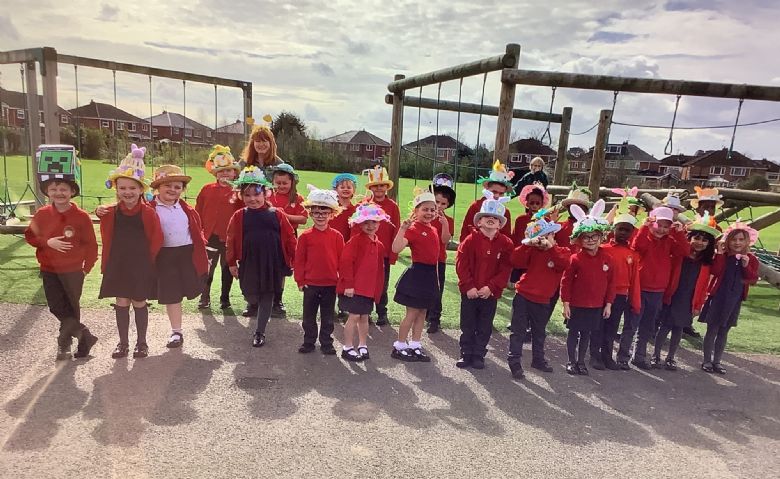
Easter Bonnets Parade
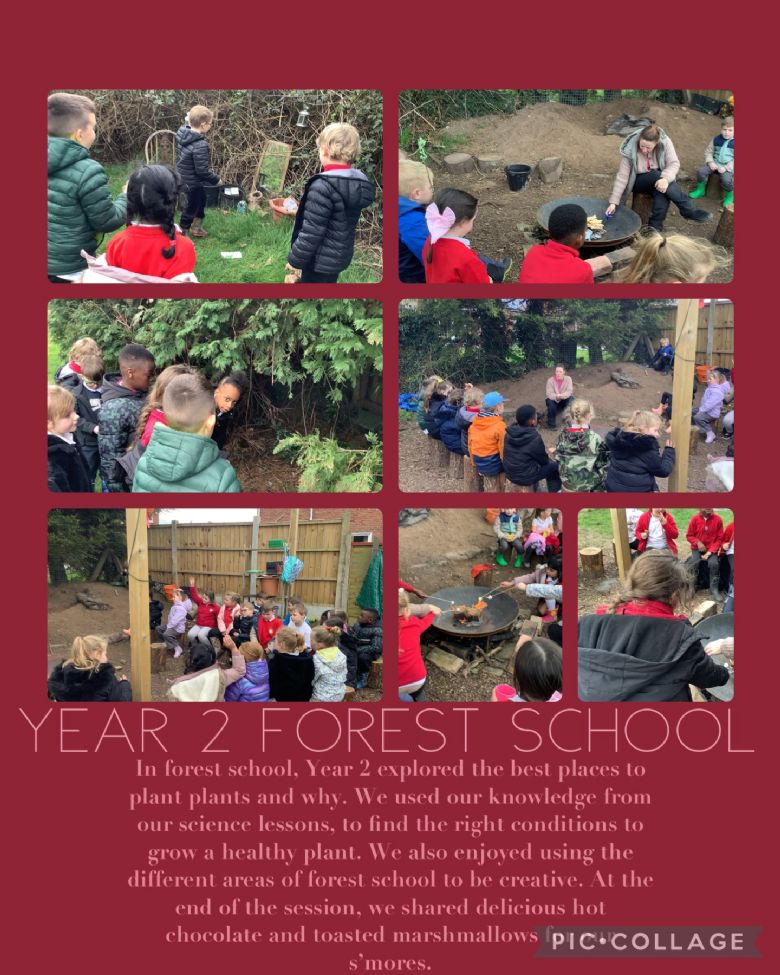
Spring 2- Forest School
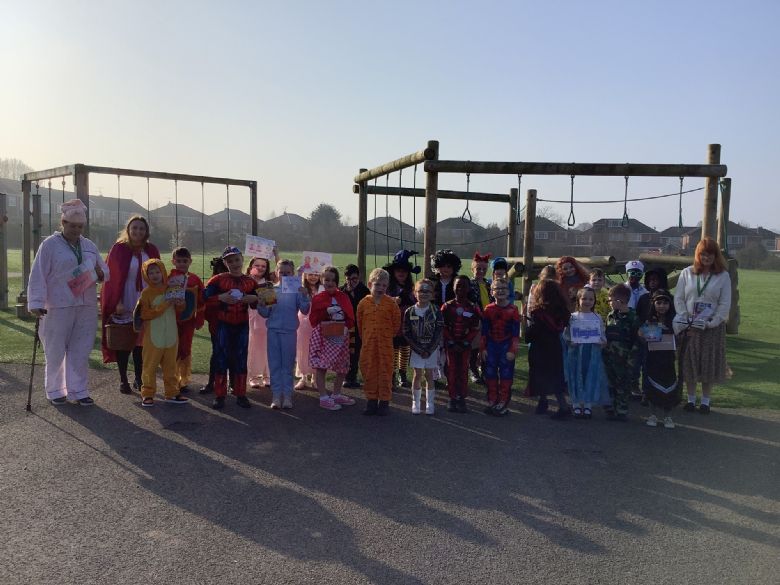
World Book Day 2026
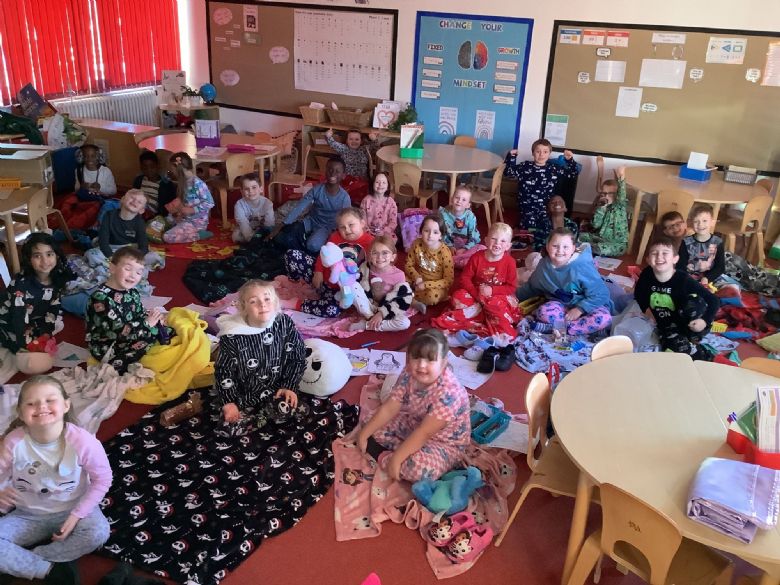
Christmas Pyjamas & Movie Day
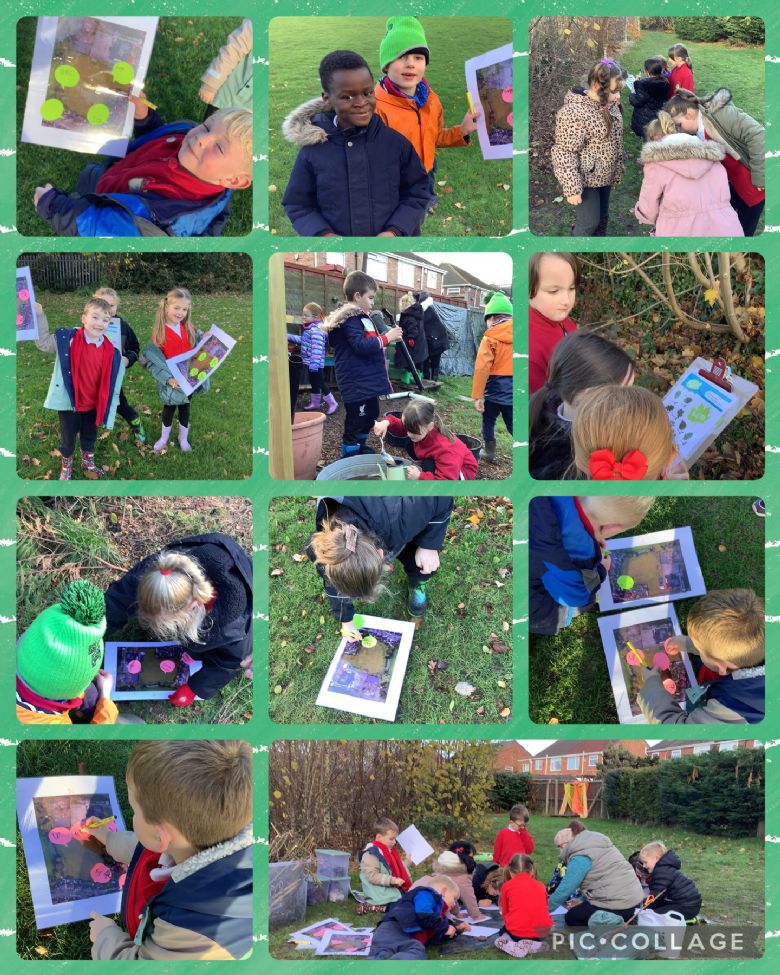
Autumn 2 Forest school session
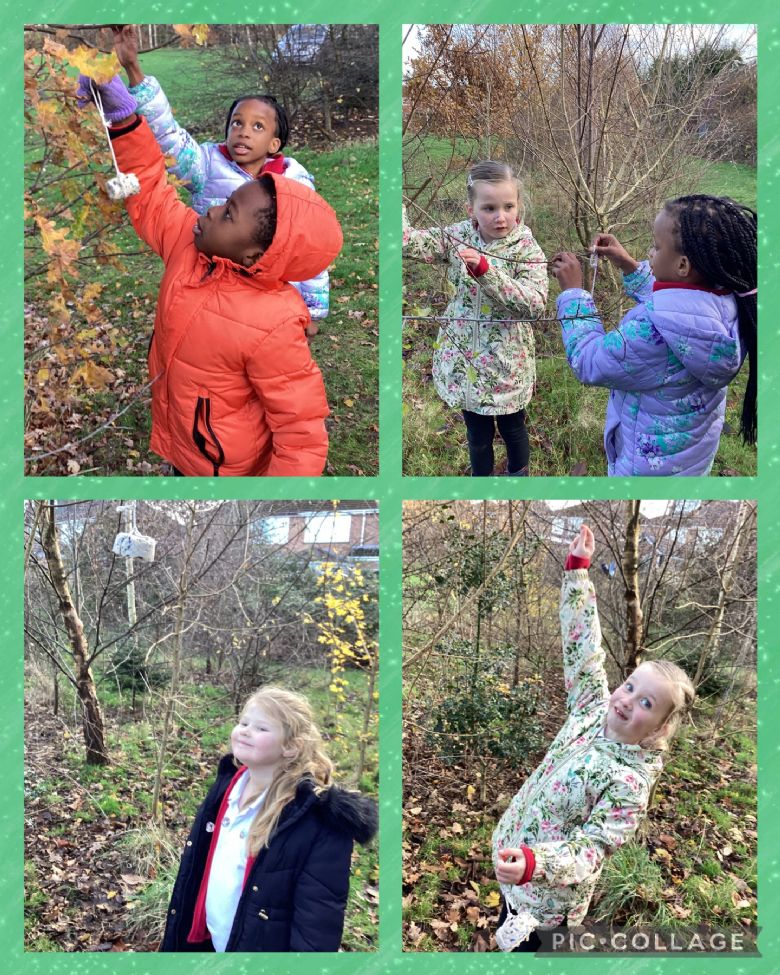
Year 2 have really enjoyed their Forest school session this week. They've used a map of the school grounds to map different physical and human features that can be found in school. They have also had time to explore our forest school grounds and hang the bird feeders we made as part of our writing unit.
Bright Colours Day
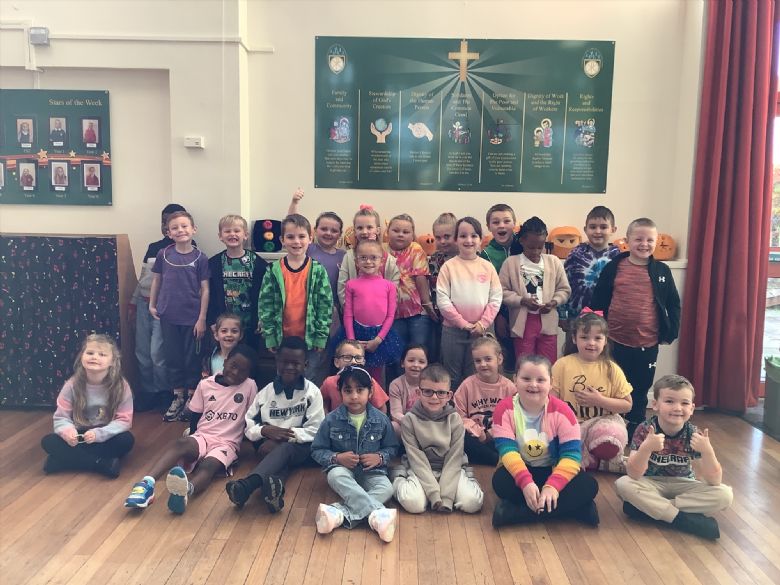
As the dark nights are drawing in, the children have been learning about the importance of wearing bright/fluorescent clothing so that they can be seen, especially by traffic, when out and about. To encourage this we celebrated Bright Colours Day when, instead of wearing school uniform, the children were asked to come into school wearing bright clothing. Our class didn't disappoint!
Autumn 1 Forest school session
🌿 Forest School – Celebrating Creation 🌿
This week our children enjoyed their very first Forest School session, perfectly timed with the Catholic Church’s Month of Creation. Linking their learning in Science and RE, the children explored Living Things and their Habitats and reflected on the beauty of God’s Creation.
They discovered what animals need to survive and investigated how different creatures make their homes in our own school grounds. We built hedgehogs homes, a bug hotel and designed creation flags. Alongside this, they discussed the important concept of stewardship—understanding that God has entrusted us with caring for the world and all living things.
It was a joyful start to our Forest School journey, bringing faith and learning together in the great outdoors 🌎✨

Helpful links
Click on these extra links below to play some exciting maths games linked to your times tables.
https://www.topmarks.co.uk/times-tables/coconut-multiples
https://www.topmarks.co.uk/maths-games/hit-the-button
https://www.topmarks.co.uk/maths-games/mental-maths-train
Follow the link below to read free eBooks online on the Oxford Owl library:
https://www.oxfordowl.co.uk/for-home/find-a-book/library-page/